
How we partner with you
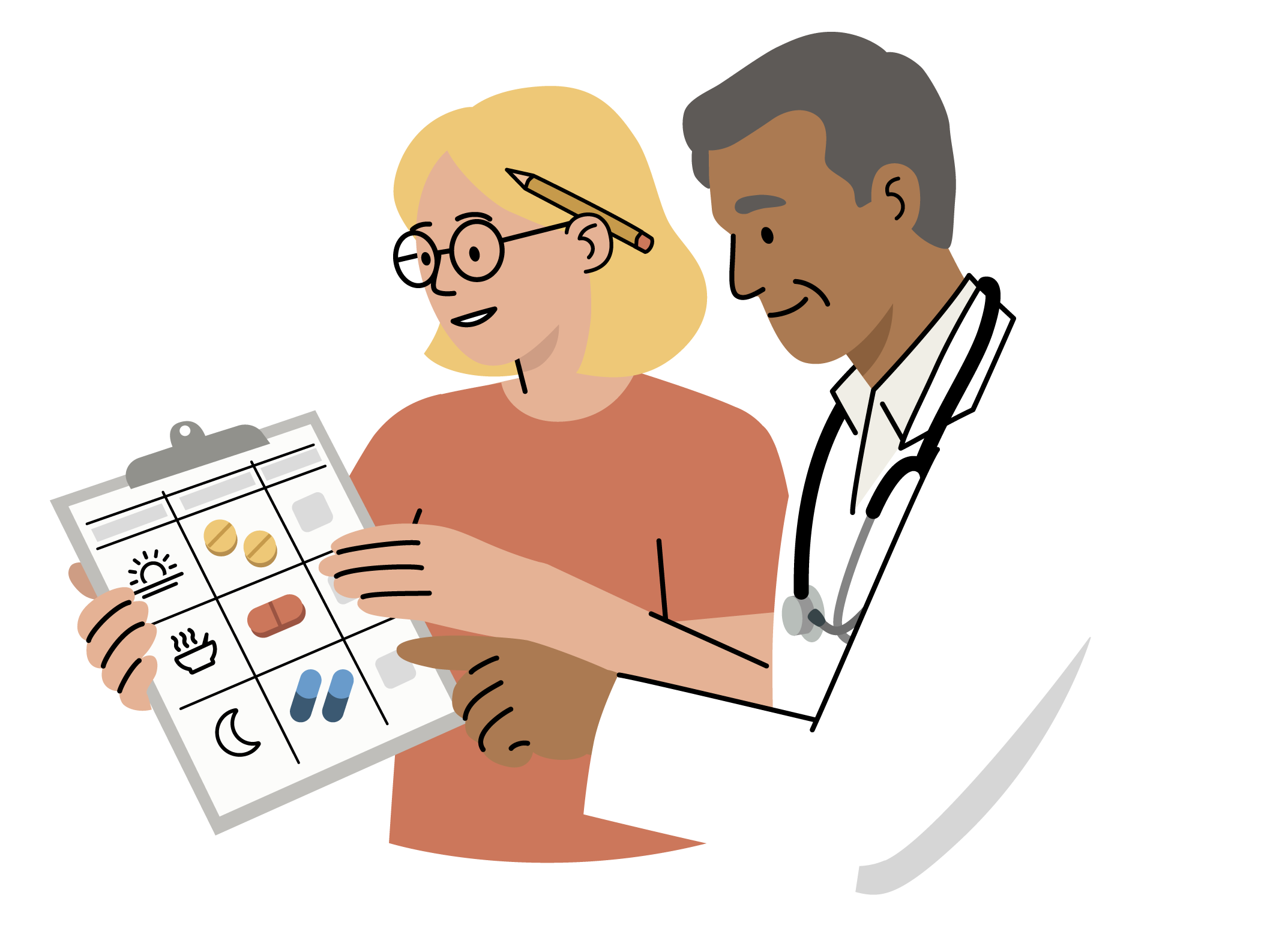
We create patient education that meets your organizational goals and your community's needs. We work with hospitals, health authorities, Veterans organizations, pediatric hospitals, and nonprofits across Canada.
Understanding your goals
During our project kickoff, we discuss and confirm with you:
The communication goals and success measures
The evidence and source materials the resource must follow
The intended audience’s needs, language, and cultural context
Who will provide subject matter review and final approval
Whether patient or community advisory sessions are included
We also gather any existing brand guidelines and assets, as well as any visual references.
What does success look like? Are you trying to:
Improve patient understanding?
Empower patients to make informed decisions?
Drive specific behaviour change or action?
Lower the barrier for accessing services and supports?
Community-informed design
We conduct in-depth research into the lived experiences and communication needs of the intended audience. This includes reviewing peer-reviewed literature and first-person accounts. We use these insights to identify the language, concerns, and cultural context that should shape the resource.
When direct engagement is included in the project scope, we can also facilitate trauma-informed advisory sessions with patients, care partners, or community members.
Collaborating with your team
You're involved at every milestone. We typically schedule weekly client calls to share what we're working on and gather your feedback.
We can create new visual identities or adapt to your established brand and style guidelines. Our team works directly with your subject matter experts. Together, we translate complex science into clear, accurate visuals with accessible language.
Download our Project Guide for timelines, milestone deliverables, and pricing.
Health literacy & accessibility
Every patient education resource is designed and evaluated against the applicable PEMAT tool and the CDC Clear Communication Index. When copywriting is included, we write clearly at a reading level appropriate for your audience. For adults, our default target is SMOG Grade 6.
Captions are included with every language version of an animation, along with an accessible descriptive transcript.
Newly designed illustrated digital resources are produced as accessible PDFs, with tagged structure, logical reading order, metadata, alt text, and real text, to support WCAG 2.2 Level AA and applicable PDF/UA requirements.
Add-on services
Health literacy assessment reports
Audio description tracks
French and other multilingual adaptations
Patient, care-partner, and community advisory facilitation
Copyright assignment and editable source files
Measuring impact
Depending on your goals, we can help you identify relevant success metrics for you to track.
This might include:
Usage data (downloads, views, engagement)
Patient comprehension and engagement measurement (before/after assessment, interviews)
Behavioural outcomes your organization tracks (medication adherence, screening uptake)
Qualitative feedback from patient communities
We ask clients to share anonymized outcome data when possible to improve our approach and demonstrate the impact of well-designed patient education.
FAQs
-
We work with hospitals, health authorities, nonprofits, and public health organizations across Canada.
Past clients include Atlas Institute for Veterans and Families, SickKids AboutKidsHealth, and the Chronic Pain Centre of Excellence for Canadian Veterans.
See examples of our work.
-
Yes. While most of our clients are Canadian health organizations, we have created resources for organizations in the United States.
-
Every project is informed by in-depth research into the lived experiences and communication needs of the intended audience, including peer-reviewed literature and first-person accounts.
When direct engagement is included in the project scope, we can facilitate trauma-informed advisory sessions with patients, care partners, or community members.
-
Yes. We adapt to your established brand and style guidelines, or we can develop a new visual identity for your resource from scratch.
-
Yes! We can collaborate directly with your clinical and research team throughout production. The level of involvement is flexible and depends on your project and your organizational requirements.
-
A brief description of your project, your target audience, and your timeline. From there, we'll schedule a free discovery call to discuss your goals, scope, and budget.
You can reach us through our contact form or at hello@anatomiistudio.com.