

Chronic pain research resources for Canadian Veterans
English and French animations and companion infographics,
co-designed with Veterans and researchers
Overview
Canadian Veterans experience chronic pain at twice the rate of civilians. The Chronic Pain Centre of Excellence for Canadian Veterans is a federally funded research centre improving pain management for Canadian Armed Forces members and Veterans across Canada.
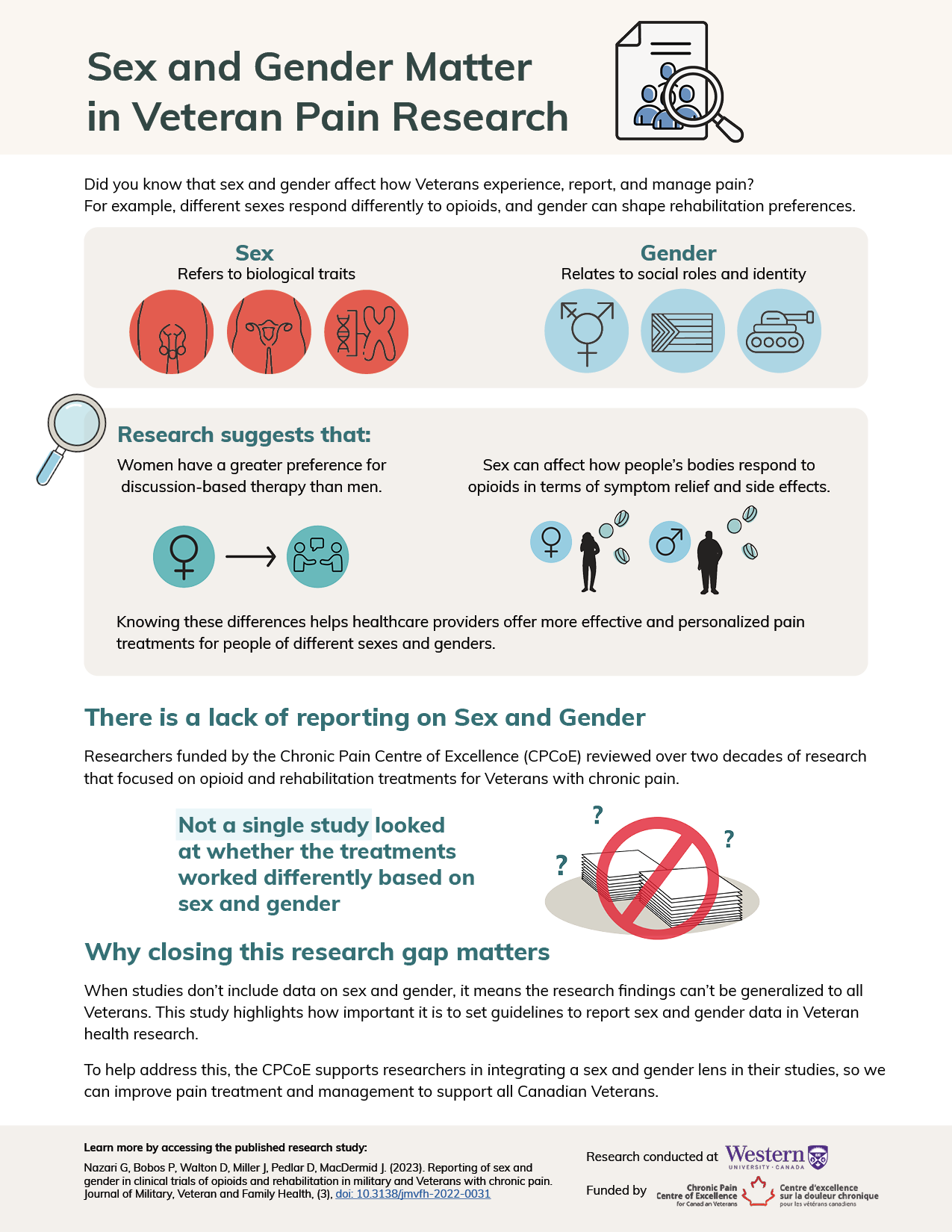
We partnered with CPCoE to create 4 animations and 2 companion infographics to help them communicate their mission and share key research findings directly with Veterans.
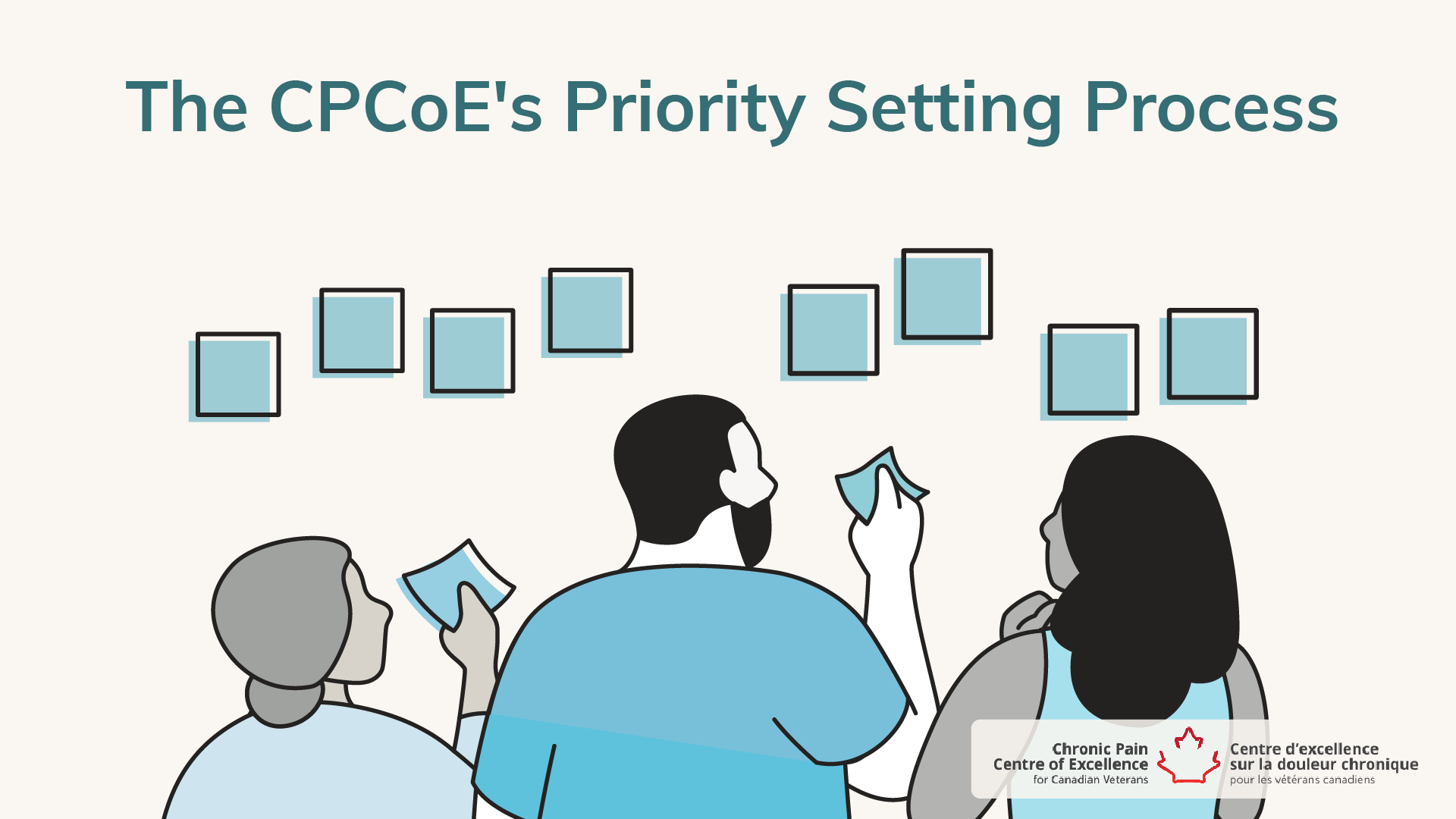
The core promotional and priority-setting animations break down how CPCoE collaborates with Veterans to shape research and mobilize knowledge. Meanwhile, the two research-focused animations shine a light on urgent healthcare gaps: the absence of sex and gender data in chronic pain studies, and the critical lack of Veteran-identified health data across Canada.
Today, the promotional and priority-setting animations anchor CPCoE’s homepage and research portals, while the full suite of videos lives across their YouTube and social channels. The companion infographics serve as highly accessible, downloadable resources and printed handouts for the community.

Approach
Participatory design
We held advisory sessions with Veterans and worked closely with CPCoE subject matter experts throughout production. Their input shaped which research findings to highlight and how to represent the Veteran community in a way that felt both accurate and meaningful. Learn more about our participatory design approach.
Health literacy & scientific accuracy
Content was grounded in peer-reviewed research and developed in close collaboration with CPCoE researchers.
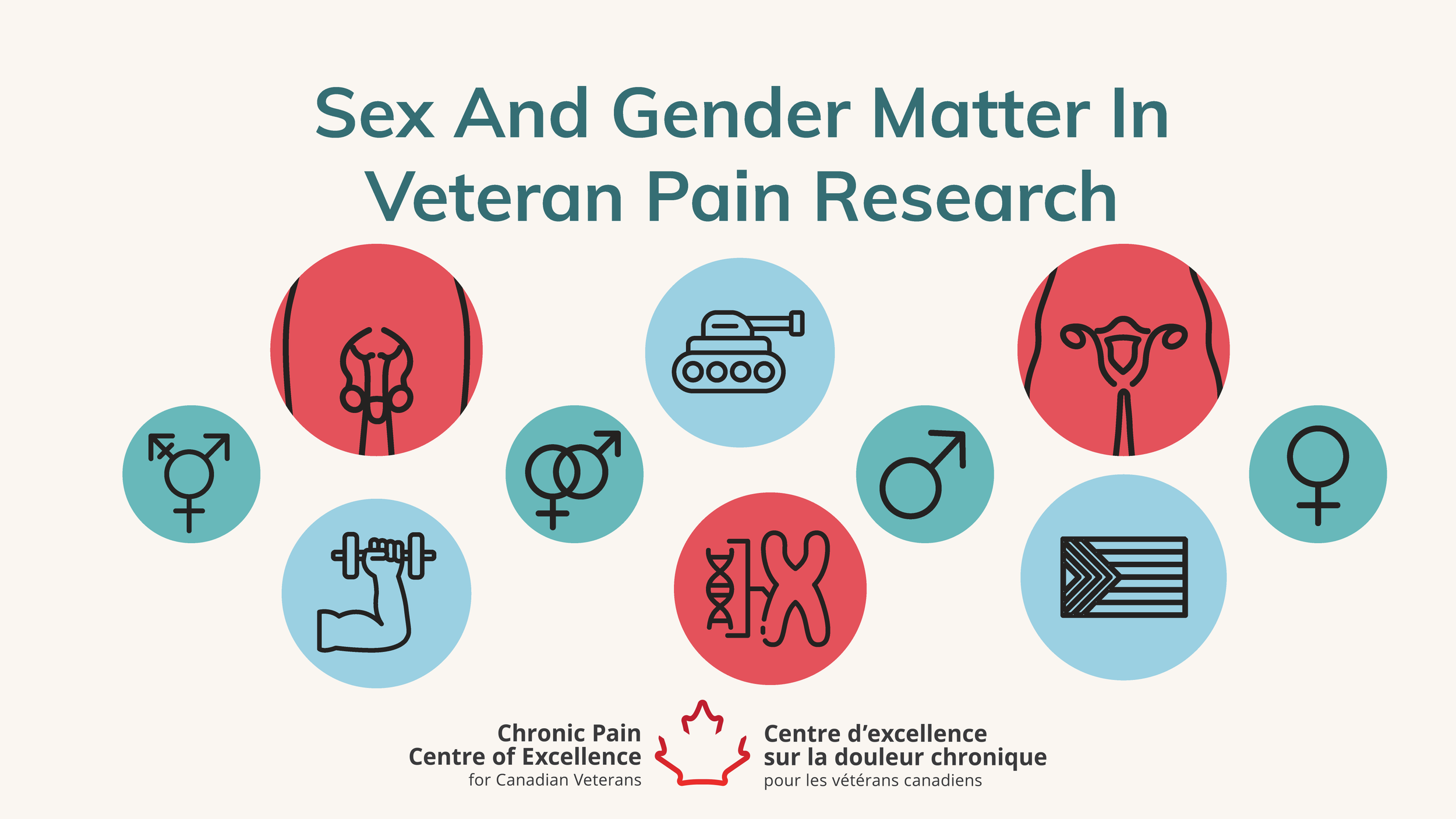
We used iconography to do the heavy lifting for abstract concepts that are easy to confuse. For the sex and gender animation, we designed distinct icon sets using biological and social imagery specific to the Veteran context to clearly differentiate between terms. For the health data animation, we used computer and file folder icons to represent health records, showing Veteran data as visibly absent from the folder to communicate the key message directly without relying on narration alone.


Cultural responsiveness
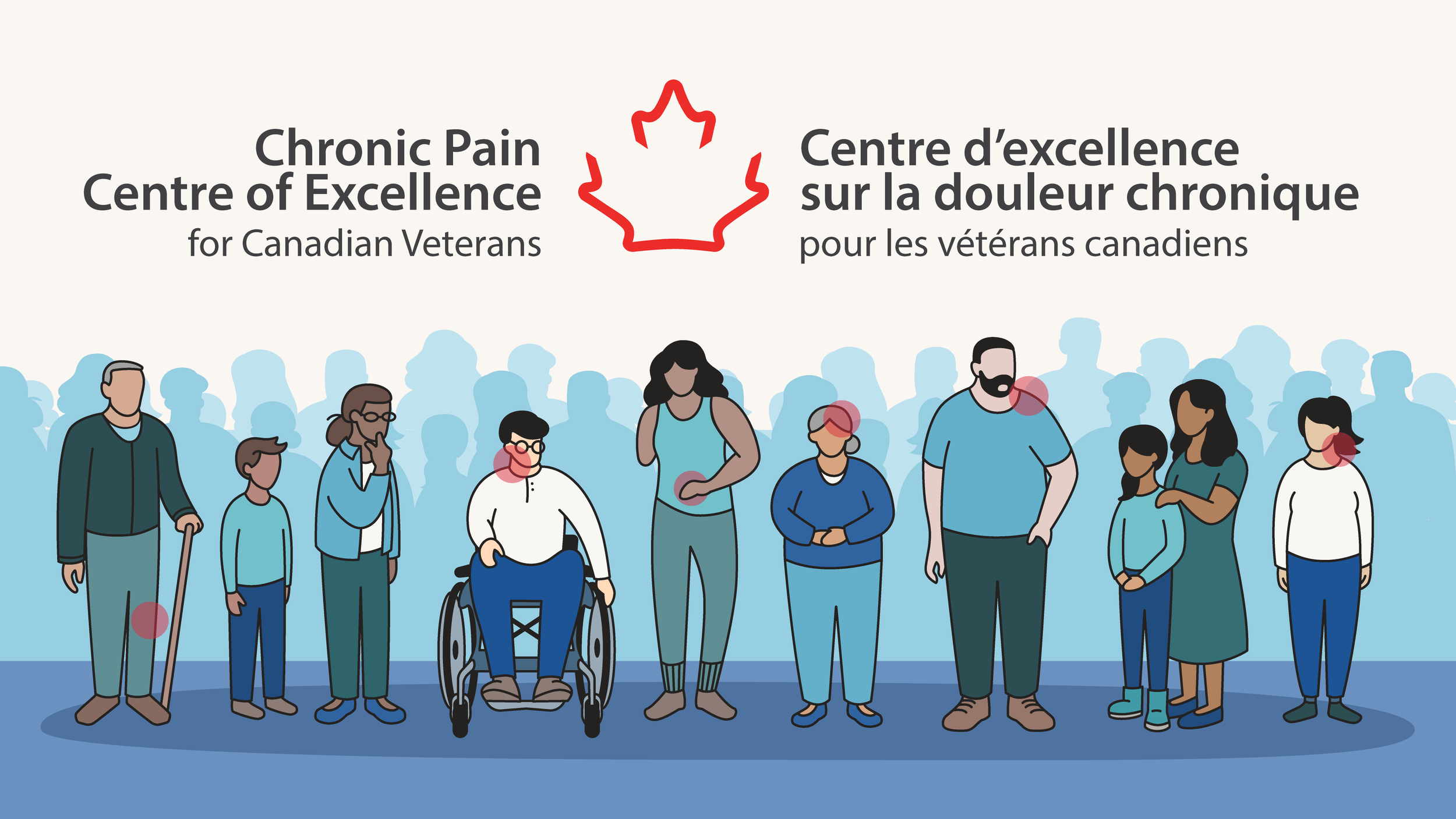
Characters across all deliverables reflect the diversity of the Canadian Veteran community: different ages, ethnicities, body types, and abilities.


Interested in our approach?
See our design principles and how we partner to design patient education resources.
Deliverables
We created English and French resources, including:
1 promotional and 3 educational animations (video files)
2 companion infographics (PDFs)
Closed captions (.srt files)
Social media exports (video files in 9:16 format)